Trees, Skis, and a Book

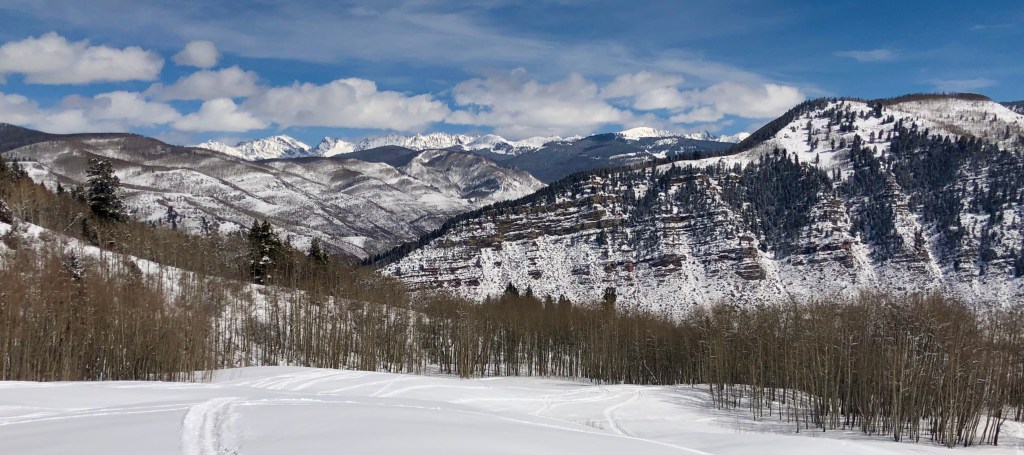
Where I am the Trees was born (Photo by Allison Ebbets)

Sometime toward the end of 2019, I realized that my friend Hannah and I both really love trees. Also mountains, skiing, snow, dogs, and many other things, but the true appreciation and connection with trees was a bit of a revelation. We both happened to be in somewhat transitional times in life and as Hannah shared and created art in an increasingly public forum, I was inspired to do the same, to create and share, and I knew it should probably start with trees.

In early March 2020, just a few days before Covid lock-downs started, Hannah and I got out for a beautiful morning of spring ski touring. As I had watched Hannah put her art in the world over the previous few months, and became more and more inspired by the content and the nature of her work, I knew that I both wanted to put my own work out in the world and especially to propose a collaboration. I had developed a nascent idea for an illustrated set of children’s books focused on the natural world, starting with – naturally – trees: I would write the words, Hannah would illustrate. I had words floating in my head, looking for an outlet. Hannah’s aesthetic and shared love of trees, mountains, nature, and concern environmental justice, and environmental racism seemed like the perfect fit that would complement my initial vision.

Hannah agreed with enthusiasm and our first collaborative project was born! I wrote, she drew, and the result was exciting enough for us to continue the project and begin putting it out in the world. This was a HUGE step for me and my feelings about it so intense that I told almost no one for over a year! As our lives took some pretty big changes in the summer, going from time off to full-time jobs, we continued pursuing our individual creative projects and our collaborative book series, not quite knowing where we were headed but always continuing to move ahead.

A few months ago Hannah invited me to participate in a newly forming artist collective called Shim Eco, a branch of the SHIM Art Network. I jumped at the chance. In a fun but somewhat impulsive turn of events, rather than writing for the initial show, I turned to creating visual photo collage work and included two pieces in the inaugural SHIM Eco show on Artsy.net. Hannah and the SHIM Art Network both encouraged and appreciated this new vision and medium, for which I am endlessly grateful! But the books are coming.

(Image: Returning, 2021. Original Work composed of mixed digital media. Allison Ebbets)

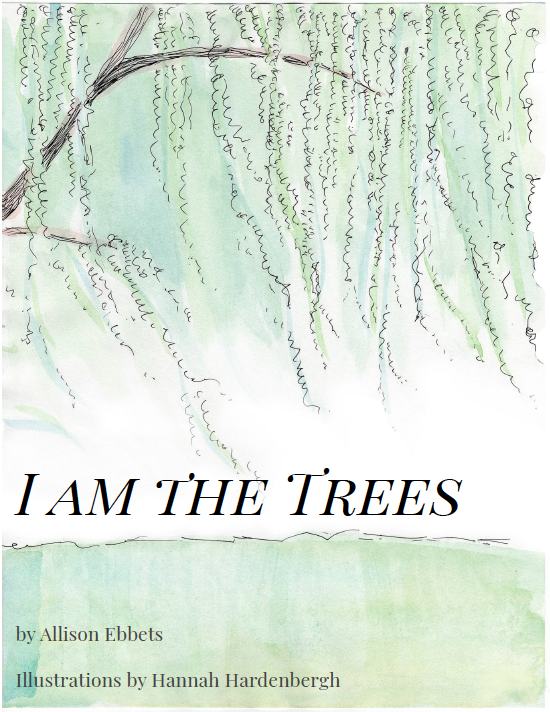
Hannah and I will share the first edition in our children’s book series, I am the Trees, as a downloadable PDF through the SHIM Eco Artsy page later this summer. We also plan to create physical copies and will donate a portion of our earnings to organizations that provide under-served communities opportunities to experience non-built environments (details of the physical book release and who we will partner with are in the works). I am beyond excited that we have embarked on this journey. I am beyond thankful for this process, for the SHIM Art Network and what it stands for, for Hannah seeing this side of me and inviting and encouraging me.

Hanna and me skiing and talking books and life. (Photo by Allison Ebbets)

This new step feels like both a beginning and a culmination, which is a fun and exciting place to be. These creative outlets provide, for me, just the right combination of my past as a research scientist and working ecologist with my love of the outdoors, using technology to create interesting visuals, and sharing an appreciation for nature and stewardship through positive and thought provoking approaches.

I’m a huge believer in teaching through positivity. If my work helps someone shift an old perspective by feeling curious about the subject, connected to a tree, or interested in preserving areas to get outside to ski, bike, run, hike, boat, picnic, or read, it feels like the beginning of a shift in our collective point of view that might lead us to a better future. It will be one of my greatest joys in life if I ever know that this has happened on even the smallest scale.

Don’t mistake me, there is a place for more alarmist narrative and visuals. I was extremely moved by the National Geographic issue on plastic waste several years ago. Even as a teacher, working ecologist, and someone both educated and interested in environmental issues, I did not – maybe even could not – appreciate the scale of that disaster until I saw the images. Thinking about it 4+ years later as I write this, it still gives me chills and reinforces my personal steps to reduce plastic in my life. We need to have context, we need that imagery. We need to see and hear about it, but it is not my personal place of drive or inspiration.

My place is to share beauty and wonder, spark curiosity and compassion with the hope that this might inspire others to form their own connection to the world. I believe that we need the balance of knowing the world where it is still habitable, beautiful, and fulfilling: where it heals. As much as we need to see the scary and ugly, we need to have a connection to those places that are wild, uninhabited, beautiful, and healthy in order to understand what all of that devastation caused by many of our modern (and in many cases ancient) technologies and development practices actually means. We need a knowledge of both the ruined and the ideal in order to find the attainable middle ground.
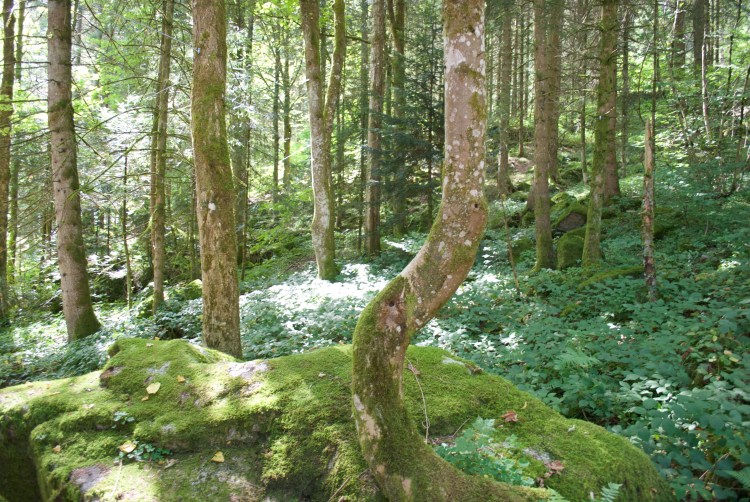
I am new new to thinking of myself as something other than a scientist who has diverse interests. But I am getting more articulate in sharing the sides of me and especially the whys. Everything I’ve published here (and a lot of false starts behind the scenes) is wrapped up in these emerging projects. Whether overt or not, my desire to experience a better balance of life and work, to foster compassion for all living things, and to see a more just world where we ALL have access to clean, healthy, natural spaces on a regular basis lies behind the visual and written creative pieces that I have been working toward.

This post is about my own progress and exciting new steps, the people who are helping me find my place, and our upcoming work. But it is also about looking for a better world for us all, and sometimes that means starting with yourself. This process has brought me joy, a sense of rightness, and gives me the capacity to expand my world in a way that has not been accessible to me in years. And that gives me much-needed hope.

Here are some resources to find more information about our creative endeavors:
SHIM Art Network
SHIM Eco (inaugural show on Artsy)
Hannah Hardenbergh IG @withmountainsinmind
Allison Ebbets IG @out.there.with.the.trees

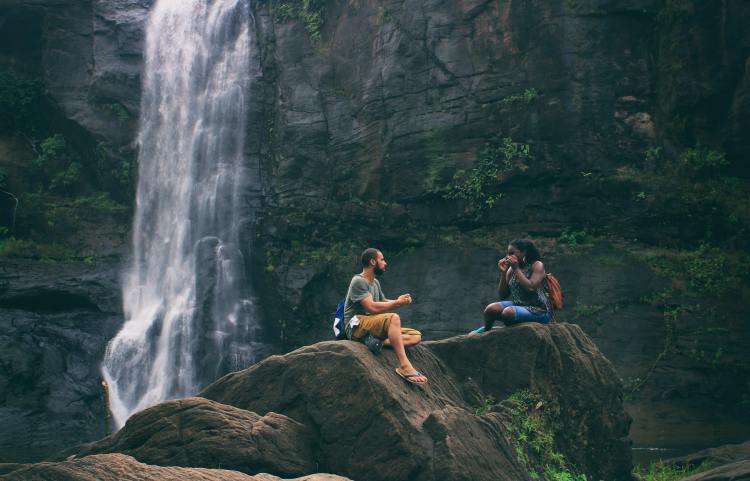
Common Ground

I’ve been pretty quiet on here lately, but out there in the real world I’ve been doing a lot of work. I’ve been doing literal work at a new job, and part of my silence is definitely about taking the time to settle in there, adjusting to all of the demands and practicalities that come with working in an office in a public-facing job. I’ve also been continuing to pay attention to the social discourses going on, doing my best to learn and hear. Much of what I hear is not necessarily new, so my work at the moment is internalizing and learning how to bring action to knowledge in a constructive and (personally) sustainable way. Also, sleeping enough.

I’m making progress. My new job is a very significant departure from my previous line of work, but it integrates many of my best skills and I’m finding it really satisfying and uplifting. So even though I have some new stresses on my time, even though I’m having to carve out little moments to exercise and get outside, I’m overall in a really good place. In short, many of the things that were missing from my life when I was working before are with me. I still have capacity to seek out changes in the world, to find my voice and my place.

This past summer, my family and I got out to state parks more than we ever have. In the past, my husband and I were more likely to go for long runs on remote trails, sometimes with friends, but to places where there aren’t that many people. Most people hike or backpack to those areas, and we could get far enough running that we regularly got to places with very few other people around. And I loved that. But with a toddler, that’s not very realistic at the moment. Plus we’ve been SUPing and picnicking. In Colorado there isn’t much water, so we end up in places with a lot of other people. One thing I’ve been thinking about is the diversity of people who go to these places.

Over Labor Day weekend we went to a popular lake with a large camping ground and a lot of fishing. The campgrounds were all full, tons of people were out on boats, fishing, and walking around the lake. I saw a lot of signs of political diversity, and it got me thinking about how much we have the outdoors in common. All types of people like to get outside into the woods to do different kinds of things, and we often do them near each other. It’s a good example of us having more in common than not: we may do different things (there weren’t many others running that trail, though I wasn’t completely alone), but we all want to enjoy the same beauty and peace.

And I see that same reality now that it’s winter. We live near a ski resort and there is actually quite a lot more cultural, ethnic, and yes political diversity than one might initially expect. So here we are, this melting pot of people who to be outside in the dead of winter, many ski or snowboard, but many also walk, snowshoe, shop, or attend outdoor events like concerts. Whatever your tastes, there is something here, and we are all out there together.

And in this time of Covid, we must also take care of each other in a new kind of way. Not everyone does it willingly or joyfully, but the vast majority of the people out there do actually follow the rules, and it is working. My community has been lucky enough to experience fewer cases and deaths relative even to nearby, similar towns. There are likely many, many reasons for that, but the truth of it, too, gives me hope.

We certainly have work to do as a nation and as communities. If we are to find more harmony and common ground, we’ve got a long way to go before that dream is a reality worth truly celebrating. But I think that, in order to get there, we need to stop focusing so much on our differences: it does nothing but magnify the divides and center the discourse on our differences. But if you think about it, the vast majority of experiences in our daily lives are about our similarities and living side-by-side peacefully. We do not have to agree to walk next to each other in good faith, we need to learn to do this more globally.

I learned in my earlier career that finding the common benefit in a sticky situation is the best way to continue moving toward a solution, even when there are major and possibly un-passable road-blocks separating the parties involved. But more often than not we can find at least one path that has a mutually beneficial outcome. By focusing on that benefit and that path, we can stop focusing on the differences – perhaps forget them altogether – and move ahead together. No one will be 100% happy with this path, it is by definition a compromise, but when it is the only road that leads to progress, it is, in fact, the perfect path at that time. And by providing an option that takes the focus away from disagreement, everyone is left feeling happier and often proud that they were able to find a way through the challenge together.

Our constant focus on jumping ahead, on being the best, or the most right holds us back. It leads to backlash and anger because it perpetually focuses the discussion on issues that we cannot resolve. It struck me a while ago that many of our stickiest issues are exacerbated by engaging in a discussion of the “wrong” topics. When we focus on the disagreement and give voice to the conflict, we take the discussion away from actionable issues. If we could focus our discussions on how real-world problems (extreme climate events, racial and social disparities), we could avoid a lot of blame and heartache and simply move forward together.

So let’s change our focus. Let’s start with what we all like and can agree on. Everyone likes trees. Right? I mean, what’s not to like. Let’s start from a place of commonality, and step from that stone to the next piece of common ground, until we suddenly find ourselves on the other side of the divide, where there is enough wide-open space for us all to exist together on common ground.

Finding the Capacity

In the wake of the last few weeks, my previous two posts feel both prescient and timely. I certainly didn’t know what was coming and did not expect a global demonstration demanding change. But I have been feeling these changes coming on, and working my way toward speaking up and speaking out about what matters without the specter of perfection or the fear of disagreement. I will not pretend for a minute that those fears and concerns do not exist, but I now have even more motivation and purpose to find the words and actions that I want to use.

For the last few weeks I have been listening, observing, processing, and synthesizing the messages and information related to racism. I’ve drafted text, then pulled back, I’ve watched some more. I’ve thought about my past, the information I had before and, the information is new. But I want to step in, I want to act and so I begin here, in writing.


Before we get started …
One of the messages I’ve seen clearly from the black community is that they do not wand and definitely don’t need guilt, excuses, etc., from white people. We need to remove, not increase the burden for people who are already far too burdened. So in any situation where I discuss my own feelings or reactions or guilt, it’s just that, mine. I am not looking for brownie points or sympathy. I am sharing because I believe it’s important to make this conversation open, honest, heartfelt, and vulnerable. By writing my own internal experience and observations I hope to help  us all learn how to do better in the future. Because if you don’t understand what you did wrong or what held you back before, it’s all too easy to fall back into those old patterns.


I am a white woman and grew up largely in wealthy areas that were predominantly white. My hometown, Boulder Colorado, is notoriously lacking in diversity, but also very open to diversity and eager to teach its children how to be accepting and inclusive. As an adult, I lived in Boulder for a while again before moving to an even more wealthy ski town for my husband’s job and our shared interest in living near the outdoors in wild and wide open spaces. If you’ve read any of my previous posts, it’s obvious that one of my greatest joys comes from being outside, and our life here is about that dream, that passion.

As a child of Boulder, I had access to information about diversity, race, and other cultures, but very little personal experience or connection to people with that experience. In college I sought out a liberal arts education, largely because I wanted to study religion, culture, literature, and history, because I did not want to be steeped in only the sciences. I had access to information about racism, about what it looks like in America, about its impacts. But, again, my understanding was academic, and I did not gain the tools needed to do more with what I’d learned.

I find that, “what racism looks like” has been familiar to me for a long time, but something about George Floyd’s death rocked me in a new way, even before the protests began in earnest. The specific circumstances of his death brought me to a new level of understanding about what racism looks like every day, everywhere: the constant fear and struggle that black people face, that non-white people face in our world. I was never indifferent to the impact and devastation of those struggles, but I was never moved quite so dramatically as I was after learning about Floyd’s story.

Clearly, I was not alone. I’m aware of all of the big-news innocent deaths of the last several years, and every one made me angry, sad, and sick. But before these last weeks I felt helpless, trapped, and incapable of making a difference or even a move. And so I’ve been getting curious with myself, trying to understand what has changed and why, what made me hold back before? How can I use that understanding to ensure that I don’t hold back in the future? I think there are two primary reasons for my awakening, if you will: emotional and physical capacity and a perception that the conversation has changed.</p>

Capacity

I believe that, capacity – emotional, physical, and intellectual – is a huge piece of the puzzle for me definitely and I suspect many, many others. I left my corporate job because I was burned to a crisp. I was, like so many Americans, over-worked, under-paid, struggling to feel financially secure, struggling to get on top of life. All of my education and privilege did not exempt me from burnout, depression, anxiety. I had almost no capacity for anything outside of work and addressing my family’s daily needs, let alone engaging in community or in the ideas and ideals that drove me as a younger person. While I lamented and hated what I knew about racism, I lacked personal capacity  to do anything more than feel helpless and angry.

I think that the same is true for many, if not most of us (Americans in general, white people who wish to do better in particular). Work culture in this country was the catalyzing influence for this blog, it’s the subject of any number of articles about American culture, and it is the threat used against us by those with money and power: ‘all you have to do is work harder to rise up and then you’ll be rich like me.’ What a lie. I’m not sure if I am cynical enough to believe that the culture around work in this country is a conspiracy concocted by the rich and powerful to stifle our creativity and desire to change our realities. But I haven’t ruled it out. It’s not so different from examples from history. And it’s exactly what Aldous Huxley predicted in Brave New World.

Other than to salve my conscious and relieve some frustration, it really doesn’t matter so much why or how we got so tired, busy, and cashed out. What matters is that we can change it. I had been thinking and saying and believing that the change of pace effected by Covid-19 prevention measures is an opportunity to keep the pace a bit slower, to afford us some time to ourselves, some time for getting outside, so that we can be happier and healthier. And now I add to my list, so that it can give us the capacity to address the challenging and complex issues that we face, including especially racism and environmental destruction (which, by the way, I see as very closely tied in many ways and is something I’ll discuss in the future).

I also think that the “new” world we’ve been living in likely contributed to so many of us having more capacity to finally deal with what racism really means here. I know some people attribute it to boredom or cabin fever, and I don’t doubt there is some truth to that. But I think that there is a deeper root, and that after people had time to slow down – to do things that bring them joy on a regular basis, to find a better balance between work and the rest of life – that they, too, were emotionally and physically stronger. That this balance increased our capacity to face difficult questions, difficult personal revelations, and accept the challenge to commit to change.

Changing the Conversation

The other piece that changed for me is a change in the tone of conversation that I am hearing now. I am definitely guilty of feeling like I couldn’t say anything because I am
a) white and didn’t know what I was talking about,
b) not educated enough on the issues,
c) at risk of offending someone or saying something inadvertently harmful, and
d) too removed from the issues to make a difference, have an opinion, or contribute to real change.

These excuses feel feeble and silly after the last weeks, and so I move to change. But I definitely got this message, more than once, along the way. So I felt closed off from the conversation and thus declined from entering it, choosing instead to focus on areas where I did feel like I contributed.

I think it’s important to bring this fear out in the open, not to place blame, but to acknowledge that the sort of absolutest and finger-pointing rhetoric that is so often associated with a call for change is, in fact,  likely to scare of a large swath of potential supporters who exist outside of the center of the discussion. We can’t all be an expert on all of these issues, but if the last weeks have taught us anything, it is that there are millions of people who want to do better, who want to move ahead to a new, better reality, and those people need to have room to learn, to make mistakes, and to feel welcome to the cause even when they misstep.

I am so grateful for this shift. It is really what unlocked me fully from my fear. Without seeing heartfelt messages from brave black people, in which they asked for support and gave permission (for lack of a better word) to make mistakes, I would likely still be feeling upset, frustrated, and helpless to step in. This tone shift has encouraged me to connect more intentionally with the black community (online because I can’t go anywhere still), to find ways to ensure that I live in a more inclusive and diverse world as I move ahead with whatever it is my life brings in the future. So, with sincerity, I want to thank those people. It is not their job to make someone like me feel better, but doing so has unlocked the floodgates made of fear and reticence, and I hope dearly that that courage is rewarded by all of us who wish to do better.

Moving Ahead

Real, tangible change will take time, we’re not going to undo the 500+ year legacy of white supremacy in a few weeks. We need to be in it for the long haul, and in order to do that, we need to shift more than just our social media accounts or our willingness to participate, though that is certainly an important first step for many of us. I’ve read it more than once, and I echo the sentiment: this is a marathon, so pace yourself.

We need to shift so much in our lives to effectively create change, and I can’t help but feel even more determined that the ideas I was grappling with before launching this blog and right up through the Covid closures are an important piece of our healing, of our way forward.

We need to slow down as a society, we need to connect with the natural world, and we need to de-polarize issues that should have nothing to do with politics. In Killer Mike’s heartfelt and moving speech to protesters in Atlanta, he reminded them to take care of their house first, that you can’t fix your community if you aren’t safe and fed and sheltered. I (of course) interpreted this broadly, that you also must first take care of the the house of your body and mind and emotional self.

So go outside, hug a tree, watch some ants, listen to the birds, do some yoga. Whatever brings you peace and comfort, do it. Take care of yourself so that you can have the capacity to support those who need it the most, to continue engaging and taking the steps within your reach to help us rise together for a better world.

Nerves and Perfection

Photo by Sebastian Voortman on Pexels.com

Something I’ve been working on lately is recognizing and better understanding how I’m feeling. It’s taken me by surprise rather often, as I have always considered myself a self-aware, introspective person. But social norms have long encouraged distancing emotion from logic, and it’s not uncommon for those of us raised in western society to live this disconnect unknowingly. It is these lessons in understanding and connecting to more of myself, that have led to the practices I encourage here: noticing, connecting with the non-human world, spending time not working, in a nutshell living more fully in my humanity rather than only in my logical mind.

The journey has been interesting and rewarding and I find myself eager to broaden the experience and engage more. Perhaps most interestingly, the synergy in the messages I get – both overt and subtle – from a wide range of sources is both amazing and encouraging. I love synergies, I love connections, it’s a perfect fit for me, and also a lovely reassurance that I am on the right path. Another fun and interesting part of this journey has been connecting more with my pre-working self: remembering the things I liked and dreamed of as a child and teenager, as well as more specific memories around certain feelings.

Another part of this process that I’m really enjoying is that I am reconnecting with the things I knew and loved when I was younger, but learned to push aside as an adult. And I think that, on the whole, that pushing aside was not the best step, because I am headed more toward the path of my wildest childhood dreams than any logical or socially safe path ever did.

In a recent conversation I was talking about the balance of anxiety/nervousness versus excitement. It’s a really fine line, and sometimes all it takes is adjusting your own perspective to tip the balance. It reminded me of one of (perhaps the) first personal lesson I received in the value of nervousness in supporting performance. As a competitive athlete through high school, it’s something I came back to often, but I didn’t carry it well to other places in my life, I hadn’t thought about it in a long time.

In middle school I was a mediocre (at best) competitive gymnast. I never passed the first level of club competition, but I did compete for a few years, and honestly thrived more on the training than the actual gymnastics or competition. Beam was typically my best event and my best score ever came during a meet when I was the most nervous I’d ever been. I was so nervous that I felt sick, and without prompting from my coach, I was able to turn that into focus and the kind of performance I always knew I could execute. I also fell (really slowly as I recall), which is (or was) the greatest deduction for a mistake, mainly because I pushed myself to perfect a move and didn’t quite hold on at the end. But I was nearly perfect outside of the fall and in the end, my greatest triumph in a loved but only mildly competent gymnastics career was also one that had a huge mistake.

I love this memory and this lesson. It has so much to notice and to give. Perfection is impossible, and mistakes don’t negate a good performance. Nerves are your body telling you that you care, that there is something to work for. If you allow nervousness to consume you, you’ll likely flop. If you allow them to help you focus, to turn your mind to your task, remember your lessons, and execute as you know you can, they can be your greatest performance aid.

I think there are two key lessons here that I take. The first is the balance of excitement and nerves. Anxiety, nerves, are most often somewhere on this spectrum, and in a lot of cases you have an opportunity to decide which path you’ll follow. When you notice your feelings and emotions, when you can name them, it gives you an opportunity to also nudge them to the side of support rather than hurt. If you feel fluttery and nervous, take a moment, what is triggering that? What is causing the anxiety? It can be an opportunity to adjust your perspective to find excitement, anticipation, and eagerness for what’s to come. From this point of view, it’s much easier to navigate yourself to a positive outcome, even if the path there is not perfect.

The second lesson – and perhaps the more poignant for me here – is to let go of perfection. My fall came in the middle of the routine, and it would have been easy to let that derail the entire thing, in which case we wouldn’t be talking about my best score ever. But it didn’t. For one of the few times in my life, I was able to set aside my mistake and move ahead with the same focus and execution that I had before the fall. And in that my greatest success came from an experience that was far from perfect.

As an adult I’ve so often felt that one mistake sets a bad tone and people lose confidence in my execution in all other ways. I don’t like this perspective, I don’t think it’s fair or reasonable, yet it’s something I’ve experienced a lot both professionally and personally. The beauty of a judged sport is that each mistake is marked individually, and you get credit for good execution just as you get marks off for poor execution. A fall or any other mistake is isolated from the rest of your performance, and therefore does not take away from good execution in other parts of your performance.

So I’m learning to find peace with my mistakes. To know that I am not a failure through and through when I’m not perfect. My hope for you and for the world is that we can move toward a world where this is true for all of us. Where we are generous with ourselves and each other, where we can reach our best performance even when we are not perfect. Because the more space we have for that, the better we’ll be all the time. If we know that our nervousness is excitement, and we know that we can succeed, we’ll also make fewer mistakes.

So notice how you feel and why, and let yourself be imperfect. You are human, we are all human.

Noticing

Photo by Gianluca Grisenti on Pexels.com

My truest wish for this space is that I offer ideas that can benefit our society, our world, as a whole. But I have been holding back. So many of the important problems in modern American society have become incredibly polarized and politicized and I do not wish to stand on one side: I want to stand across the lines, to speak to our commonalities and our mutual benefit and not our differences. But I’m worried that it’s not possible, that I don’t know how, or that my intentions won’t affect the outcome.

I see many of our most pressing issues as ones that are not inherently political, but they have become politicized, sometimes aggressively so. Cynically, I believe this is because someone (well a great many someones really) benefits from that polarity. There are certain topics that are important, that matter a great deal to our daily lives, but that are so firmly entrenched in political dialogue that sharing an opinion will mean that I will be type-cast and written-off by many people.

So I’ve been hesitating. Avoiding. Considering. And I’ve talked been talking to people I know and trust about my dilemma. The answer I’m getting from all sides is, essentially, ‘so what? If you have to say it maybe we need to hear it.’ It seems almost inevitable that I’ll be boxed up into some neat container, whether or not it’s at all fair, true, or reasonable, so why hold back? Why restrict myself to topics that feel safe, when I want to explore these thornier questions? I am finding that I don’t see a good reason, outside of fear that I’ll be labeled, judged, or attacked (in writing). And, while those things will not feel good, they are not good enough reasons because these are the issues we need to face if we are to move through our current divisions to create a society that is better for more of us.

As I write and find my voice here, I want to be clear that every idea I explore is coming from a desire to learn and teach, to find ways to make life better for more people. We live in a time and a place with a lot of suffering. Much of our suffering is being magnified by the Covid-19 pandemic, stay at home orders, and the economic impacts associated with shutting down all but essential services. But these problems, this suffering, has existed for a long time. Our world and the U.S. in particular have been losing luster and we don’t seem to know which way is up when we look for solutions. I’m not here to say I am always right or my answers are the best, but I am here to say that I see connections that others don’t always catch. It is one of my greatest skills and one that I first exercised when evaluating complex environmental problems like major oil spills and mining contamination. But this skill, this insight, also pops up with social structures, and, perhaps most poignantly, in the interaction of social and ecological structures.

This is the thread that I want to unravel. Our world is shifting, our societies are suffering, and in this moment we have stopped regular life in an effort to avoid a disastrous disease. This pandemic is helping me articulate observations I’ve had for a long time about how we relate to the environment and nature. Written that way, it seems like a banal and unremarkable topic, but it is incredibly complex, and affects every aspect of our lives. Most importantly, however much we think we’ve ‘mastered nature’ and are somehow above it, we are wrong in that belief. The forces that drive climate and ecological interactions are powerful and, eventually, unstoppable.

We see it all the time with events like hurricanes, massive snowstorms, tornadoes, tsunamis, earthquakes, and now a major and deadly global pandemic. The media presents these type of events as though they are a human enemy: we will rebuild, we will prevail, we won’t let the destruction of our town keep us from rebuilding. I admire much in the desire to rebuild and move forward. But I can’t help but think that, in many instances, that impulse is misguided. It is also interesting to consider that these so-called ‘natural disasters’ are in fact the natural forces that created our world and are actually important parts of the whole ecological picture, important forces that bring balance to the physical and biological processes that make Earth unique, that support life.

When we have the hubris to think we can control, predict, or somehow avoid the completely natural events of our world, we create an us versus them mentality that makes “nature” the enemy. And that is perhaps our greatest mistake. We can build a house to protect us from everyday nuisances like rain, snow, or heat. But we cannot stop bigger scale events, and when we do succeed at “taming” nature, it usually backfires; inevitably, it eventually fails.

There are many specific issues that we will need to work through as a country and as a global population in the coming months and years. But we need to start by breaking the pattern, by remembering that we are a part of the earth, we are part of the ecosystems – even in big cities – and we are all affected by the forces of nature. All of us, at all times. If we can remember that, maybe we have a chance to solve some of our problems, clean up some of our messes, in ways that actually do good for both people and the planet. In fact, if we cannot find ways to solve those problems in ways that are beneficial to the greatest good, they are not likely to succeed in the long run.

I think that one of the best first steps we can all take is to find a moment, a minute, an hour each day to notice something in the natural world – good or bad, nice or ugly – that we can connect with in some way. We need to make a daily practice of connecting with the world outside of our build environment, outside of the economy, the city, the daily grind. This is something we all have in common, and we all have some access to observe a plant, a bird, an insect, a cloud, the rain, the wind, a majestic mountain view. It’s everywhere around us, and if we can begin to notice, begin to find how much we have in common, we can begin to see past some of the ideological barriers that have us in deadlock. So, what did you notice today?

Earth Day is Every Day

I think that so much -that we struggle with in modern “western” society is rooted in our disconnection from the non-built, non-human world. We live in climate-controlled buildings, buy food in centralized stores, drive cars, and are generally disconnected from the natural pulses of seasons, day and night, and the other living things that surround us. Severing that connection freed us in many ways, but I sometimes wonder whether we have lost more than we gained from this thing we call progress.

While I’ve been living under self-isolation rules for about 8 weeks, I’ve been trying to take time to appreciate the slowness, to reflect, and to learn. In terms of my writing and this space, I’ve been a bit deadlocked about what to write: I have more draft blog posts waiting to go up on the site than published posts: the direction I intended to start with is no longer quite right, and the shift I’m feeling in the world is calling for a different approach. But it’s taken some time to figure out what on earth I AM trying to do!

It turns out that the shift is really rooted in the questions I’ve been asking for 20 years. I find myself realizing that I can and should study these questions, that I have the tools, experience, and education to explore the ideas that pull on me, and that this is perhaps the most perfect moment to dive in. When I first started writing for a public audience this year, I needed to talk about some of the difficulties I’d experienced in the modern professional world, but it felt flat to dive in too deep. And, in the end even that approach was really rooted in an exploration of how to re-establish our connection to the natural world within the context of our then-normal working lives. Of course, as I think and write today, it’s so clear how convergent my path has been.

Perhaps some of the reasons that I haven’t found the right approach until now is the sheer volume of questions and issues that I find related to these basic questions. Thinking about almost any topic – technology, science, religion, history, etc. – they all have a place in our story, and they all interest me. But now that I’ve got some experience behind me, and we are living through the first pandemic in living memory, the starting points are becoming more clear.

Earth Day is Every Day. Yes, I said it backwards, and I mean it that way. I do my best to remember every day that we live on Earth and that our actions have an impact. That, if we are not careful, our actions will destroy the possibility of a future with people (but not the earth or life as a whole, most likely). So if we are interested in ensuring that our future selves and future generations of people can live here, we need to be nicer to Earth. Plus, the overwhelming research shows that people are better – less stressed, more healthy, and happier – when they have regular contact with natural elements, especially trees, running water, and birds. 

This last part, about personal health, which so easily scales to public health, is where I want to focus today. Because talking about plastic pollution, the (former) hole in the ozone, and the concentration of CO2 in the atmosphere that will tip us into an uncertain future, are vitally important issues that are also scary, off-putting, may feel impossible for an individual to tackle, and (in the U.S.) have become highly politicized. But the issues around mental health, personal wellness, happiness, and public health, those feels a bit more approachable. When we think about our own health, it might be easier for someone to give it their attention, and this may help us overcome some of the polarization that comes to the surface when we talk about “environmental” issues. 

If we can take a positive from quarantine, I want it to be that we can have (not make, can have) the time to connect with the parts of life that make us human. That’s different for everyone, but a few stand-outs that seem to be emerging are spending time outside, exercising, and baking bread. All of these are about slowing down, removing from the rat race, and taking time to do something that feels good, that fills us up, and that connects us with the world around us, not the world inside our phones and offices. Just like developing robust communities among people is essential to mental health and a functioning society, cultivating connection with the natural world is essential to us finding peace, health, and moving forward in a way that ensures our ongoing existence.

I think that one of the biggest mistakes advocates sometimes make is telling people how to “save the earth.” If we’re going to succeed, we truly need everyone on board, together, making the best decisions they can. This means that people need to feel included, valued, and empowered. We need to give people space for mistakes, the opportunity to focus on the actions that feel most approachable to them, while at the same time moving toward significant changes at national and global scales that affect pollution and fuel consumption. 

And I think it all starts with building a connection to the world around us. If we feel like we belong, like we understand our place in the living world, we can wish to make the living world better. So I ask that you take a moment today to notice something outside – a bird, a tree, new grass, a millipede, a creek, a puddle – and take a moment to really see its place in the world. What is it eating, how is it moving, where is it going? That’s all, no more. But do it again tomorrow. And I’ll do it too (probably for quite a bit more than a moment, because I want to and also because I have a toddler and she is weirdly obsessed with and also afraid of bugs). The more we can all do this, the more we will connect to the rhythm of life and the rhythms of earth. And this connection will bring us closer to understanding, to community, and to a better future, for us as individuals, societies, and a global collective.

Ours to Choose

Photo by Allison Ebbets

In the last few weeks our lives have changed dramatically. Even if you don’t have to or can’t stay at home, so much of the world does and is, that we are all part of this collective shift. And I must say, while there are some elements that scare me, for the most part, I see this as an opportunity to make some dramatic changes that felt completely impossible just a few weeks ago. The barriers were so high, and the momentum so compelling, that nothing short of a global event could have provided the opportunity for dramatic and immediate changes to some of our most basic structures. But now it feels like we have been handed a golden opportunity.

At the moment, just about everyone who’s job can be done from a laptop at home is doing so. Kids around the world are home from school for weeks and in many cases months. We’re taking conference calls at home, with kids and dogs in the house being their uninhibited selves and letting us know when the delivery truck dares to enter our sphere (thanks Cooper). The professional ideal in which we pretend to have no world outside of our office is getting smashed. And I think it’s great.

I’ve been mulling over a post for a while about how much I dislike the term”work-life balance.” It implies that there is a difference between work and life, and it is predicted on a belief that you the person find your own balance on “your time” outside of the increasingly demanding requirements for work and connectedness.

Well, I call bullshit. You are alive and human while working. Your job is not God, The Economy is not God, and Work should not be the primary ruler of our world. Similarly, being a professional should not mean acting like you are a robot in front of colleagues, pretending that you don’t have human needs and a human life, with dependents (plants, pets, kids, spouses, parents, fish, whatever makes your non-work life human), a need for time to exercise, shower, read, and relax. Because we ALL need these things, and the person who doesn’t do something outside of work life is either lying, or is utterly denying their humanity.

So what is the answer? And what does this have to do with trees? Well, the answer is balance, and everything. We are at our most human when we connect with other living beings: people, pets, plants, forests, rivers, birds, fish, insects, fungus. Whatever strikes your fancy, wherever you find beauty and peace, chances are the answer to at least part of that riddle is found in the living world, not the world of work. And what stops us? Mostly time. We are so pressed for time, squeezed between the demands of job and dependents, that finding time to connect to our humanity is difficult at best and impossible for many.

Photo by Allison Ebbets

How Do We Find More Time?

To me, the answer to finding balance, or at least giving people a real opportunity to seek and find their own balance, is time. We need to have less pressure to DO, more time to BE. We need opportunity, access, financial stability, and mental space for it. And here is where I see the current COVID-19 outbreak, social distancing, and quarantine practices as an opportunity to catalyze permanent change that benefits all of us.

We are already working and behaving differently (well most of us are). And my dream, my vision, is that we take this opportunity to notice that, perhaps we don’t have to work 60 hours a week, that having more time to spend with family is good for us in every way – including work – and that going outside keeps us sane and in the end makes us better at our work as well.

There have been studies and experiments in which companies kept salaries stable and had employees work 4 days/week instead of 5. Not 4 10 hour days, not 80% pay, but a full day that, by current standards is “paid” without having to work. Pretty much across the board, the results show steady or even increased productivity: that means just as much work and sometimes more, was done in 4 days that used to be done in 5, and employees were happier, more relaxed and felt less stressed.

Why do we insist on demanding that more is more? When we have proof that less is more. People are different, I know that for me personally, 20-25 hours/week is my sweet spot – the amount of time that I’m truly productive and engaged – and anything more is a struggle that drains my energy, my concentration, and my effectiveness. Some people do better with more, or just need more time for certain kinds of tasks. There is no one-size-fits-all approach. But the answer lies in decoupling time for pay. If we pay for the job, not the time, I bet we get better work, happier workers, and most people will also get more time for life outside work.

Think about it. If you got paid to do a task, no matter how long it took, how would your life change? Some tasks would take longer, I bet most would take less time. You might feel free to go for a walk or run an errand instead of procrastinating in front of your computer, which is probably a better use of your time and more effective procrastinating. And you would feel trusted. I’ve had a few people recently tell me things along the lines of “we won’t track time, we’ve got a job to do and we’re all adults, if it’s taking longer we can discuss adjusting compensation.” How refreshing. How liberating. And, indeed, it made me feel like an adult. Also, I probably did a better job because I wasn’t worried about the time it took or if I was blowing the budget on this one task.

As we navigate this global pandemic, it’s a scary time and many people are suffering. Many more will suffer. But out of suffering can come creative solutions, and changed attitudes. I don’t wish suffering on anyone, but I do wish to see a change, and this is the moment.

Let us take this opportunity to re-evaluate how work looks, how compensation is determined, and cut the fat. What do we really need from employees? Is it their butts in chairs for 8 hours/day (stay late if you eat away from your desk), or is it quality, thoughtful, engaged work for, say 5-6 hours/day? Is it sometimes from a home office and sometimes in a collective meeting place? There’s no doubt that in-person meetings are valuable, but they are not always necessary, and demanding that people work at a certain place for a certain number of hours every day is limiting, and likely killing productivity. Do we need to pretend that kids and dogs aren’t home, that we live in a vacuum for 8 hours/day and the rest of the world and our lives don’t exist?

I think not, I think people have better relationships, better engagement, when they know something about each other besides their “professional background, skills, and capabilities.” When you know about the dog, the cat, the ficus, the teenager, you have a human connection, and a desire for mutual support. When you feel that you are treated with respect and confidence, that you will do what needs to be done, even if no one is tracking your time by the minute, seeing you dressed and at your desk, or looking at you across a conference table for every conversation.

This is our time to choose how life looks moving forward. So let us get creative about what work and life are like as we move forward. Let’s take care of each other by letting go of some of the old standards and creating a new world, one where we have time to get out there with the trees (whatever that means for you).

The Doldrums

Photo by Allison Ebbets

So much is happening in our world at the moment, and yet it also feels slow, swirling, like we are stuck in the doldrums waiting to see what direction we’ll go and how quickly.

For years I’ve had things to say to the world, and been unsure how exactly to approach it. This need to explore ideas about how our society is organized, how we relate to the non-human world, and how our work and economic systems play into those interactions (and many of our problems) was the impetus for this space. So this moment also feels a bit destined. The ideas I want to explore and share are suddenly feeling much more immediate and perhaps exposed than they have been before.

But today, now, does not feel like the right time to dive deep. Partly because I am still in the midst of a hurricane of feeling: I’m scared, furious, hopeful, stressed, anxious, and eager to see what is next. But just like it will be time before we as a society and a species will be able to move ahead, I need a bit of time to think before diving deep into much of what I’d like to say.

This feels like a time to slow down and be. To reflect on what we’ve lost and what of that we actually want back. It is an opportunity for us to make some drastic shifts in the world order, and jump forward to a more sustainable and supportive way of life. We will face some very real and very important difficulties, but we also face a perhaps unprecedented opportunity to make completely different choices about how to organize our lives, our work, and our governments.

I’m not so naive as to think that everything can or will changes. I am only hoping that we can take this opportunity to cut through some of the bullshit that has been clogging up our systems and move forward together with a better, more shared vision for how we treat each other and the rest of life on earth, to our mutual benefit.

As you stay home, take care of your families, and still find time to work, I ask that you also find moments for reflection, moments to connect with the non-human world. Without the pressures of commuting, opportunities to find entertainment indoors in controlled environments, or to gather in large, collective groups, our best last option is to spend time outside, away from other people, being with ourselves and our families.

What do we learn in these moments of reflection and quietude? What do we feel? What do we want to carry forward into the new, post-COVID-19 reality?

My hope is that we learn peace, harmony, compassion for life. That we realize that a rising tide lifts all boats, and that a cut-throat sink-or-swim system sinks the less fortunate majority while disproportionately elevating the privileged.

Working from Home and Getting Out

Photo by Andrea Davis from Pexels

Working from home has become a sudden reality for a huge number of us in the last week. I imagine that for many of you it’s a shock that comes with a lot of challenge and uncertainty. I worked from home for about 8 of my 12.5 years as a consultant, and while it had it’s pitfalls, I generally really loved it.

There are some interesting thought pieces out there about working from home, and even some studies that prove it is an advantage for both productivity and cost savings. I think working from home is an interesting work arrangement, and one that could benefit a lot of people and companies. I find that much of the work out there about working from home centers on the pitfalls for the employees (feeling like a hermit, working 20 hours a day) and the advantages for the company (lower overhead, increased productivity). But I’d like to focus on the benefits to the employee, and do away with the idea that working from home is a privilege.

While I didn’t love everything about working from home, and I dealt with some of the typical consequences (financial, perceived disconnection, technical difficulties), overall I found it to be a positive and empowering experinece.

One of the things I loved most about working from home was that I got to control my environment. I got to have a window with a view of – you guessed it – trees, and for a long time the post office, not that exciting but surprisingly engaging at times.

I also got to spend no time commuting (before daycare drop-off entered my life anyway), and I could make myself interesting lunches without having to spend all of my morning doing it. As an introvert, I had no problem sitting in a room by myself, and when I really needed to be around people, I could go to a coffee shop or call a colleague. Overall, I found it hugely satisfying to work from home, and managed it really successfully more of the time than not.

But probably my favorite part of working from home was how easy it was to get outside, even for a few minutes, when I needed to. I would walk out my door to my yard and the running trail, or sit by the water (a delightful irrigation ditch) and watch my dog hunt flies. For a long time, this was a huge life-saver, I could get outside to unwind and connect with the non-human, non-digital world for a while and be back in my office, refreshed and satisfied without much interruption to my day.

And that, my friends, is what this blog is all about: having the time and opportunity to be human in the way that you need to be. For me, that’s being outside, for you it might be something else, but working from home is one piece of the puzzle that allows us to find our humanity and live a full life.

Lessons for Success

I knew when I started working from home that it would be easy to lose focus and fall into some time-sucking traps. Think college studying. So for those of you new to working from home, here are a few things that helped me succeed.

  • Create a dedicated space: when we first moved, I knew I’d need to have a dedicated office room. I still have one, and it’s really helpful. I’ve been in situations where my dedicated space wasn’t available (new carpet installation, house-sitting), and I found that creating at least my computer space, with my usual monitor, keyboard, mouse, and a little space for paper, my phone, etc., was really effective. Designating a space for work also helps keep some separation between work and home life, and for me makes it a bit easier to avoid the “working from home means you just work all the time” trap.
  • Use your technology: when I first started working from home we had pretty old systems and I had to rely on email and phone calls to connect. This worked fine, especially with my close team members. But as we advanced and people started using text and IM more, I felt so much more connected to my colleagues. It may sound obvious, but use it! If you can’t have an actual water cooler chat, you can have an IM chat, and sometimes they’re way more fun.
  • Take breaks: it’s really easy to feel like you need to over-compensate and stay at your desk without moving for 8 straight hours. Ask yourself how you work in the office. Is this reasonable, realistic, or expected? No, you walk around, talk to people, use the bathroom, eat lunch, get water, have a meeting, run an errand, etc. At home, your routine may be different, and under quarantine we probably aren’t running out for many quick errands. But whatever the circumstances, this is an area where you have a prime opportunity to step outside for a few minutes, do a 10-minute exercise routine, or have a gourmet snack. Do the things that make you you, make you human, make you fulfilled, even if it’s only a few minutes at a time.
  • Make your space comfortable: if you’re going to be working from home for an extended period of time, it’s also important that your space is physically conducive to your work. Depending on your situation, that may present a real challenge, but I encourage you to have a good chair, a desk or table that’s an appropriate height, and space for your legs. If you’re cramped and uncomfortable, working from home is going to feel completely terrible. If you can be physically comfortable or in similar circumstances to your usual office, it will feel more familiar and be easier to focus.

Getting Out

Photo by Kaboompics .com from Pexels

I’ve touched on it a few times here, but really, my goal, my vision, my dream, is that we all get outside more. That we find ways to detach from work and news to remember what it is to be a person, to remember that we are part of something much more basic than the economy, or the global pandemic, or our corporation.

In my experience, and in my opinion, one of the most effective ways to find space for living in the midst of work is to have an opportunity to work from home. Without the demands of commuting, office politics, and casual conversations that derail an entire day, we can be more productive and also have more time for our non-work activities.

So often, working from home is treated as a privilege. In the article linked above – which discusses an actual study on the quantified benefits (to the company) of employees working from home – one of the suggestions is that working from home could be granted in lieu of a raise. I hate this idea. After talking about how much more efficient workers are, how much employers save on office space, why is this still considered a privilege and a favor? An employee who increased productivity and saved the company money in an office setting would get a raise and a promotion. So a remote worker should receive the same.

This great experiment precipitated by COVID-19 could be a huge turning point in office and work culture for the information industry. Likely people will find that they only need to work in an office part of the time or not at all, and that they prefer the freedom and productivity afforded by working from home regularly.

I envision a new world, where staff who live near the main office spend a few days per week there, meeting in person and working shoulder-to-shoulder, while also taking a few quieter days at home, with fewer distractions, no commuting, and some time for pursuing individual interests.

However this plays out, we have a golden opportunity right now to slow down, breathe, and get out there with the trees (or the cows, fish, or lizards if that’s your bag), at a proper distance from others of course.

On Getting Out There With the Trees

Photo by mali maeder on Pexels.com

I’ve always loved being outside. But somehow I learned – from a very young age – to go outside only after everything else was done: homework, work, reading, dishes, whatever. But as I got older, I usually managed to get outside more and more. I started cross country ski racing later in high school and went on to coach part-time even after I had a corporate consulting job. In grad school I found ways and places to run, and I did extensive field work outside.

But living in the corporate world really reinforced the “work first do you later” mentality that was already there. And after having a baby and going through some corporate shifts (my original small firm was bought by a much larger, mid-sized one), I stopped going outside for anything other than absolute necessity. And it was literally killing me.

So I’m here, writing about my passion: nature and society. How do we organize ourselves around or without natural environments? And why do we so readily deny our need to connect with the non-human world? And what are the consequences?

I’m not 100% clear what this space is going to look like over time, but I need to talk about it with the world. I see a hurt, a system that denies our humanity and drives us to misery, and I want to explore it and find ways to fix it. I want to share that with others and engage in a broader conversation.

It’s something I’ve been leading up to in earnest for a couple of months, and it has been in the background of my mind for many years, decades really. But it has all become so much more poignant in the last weeks as we live out the reality of a truly sinister global pandemic for the first time in living memory. I live in one of the absolute hot-beds of COVID-19 infections, near a ski resort in Colorado. As I sit here social distancing, I feel like this conversation is more necessary than ever.

In this space I plan to explore my ideas and experience, to do research, and to keep myself accountable to go outside – even if it’s just a few minutes looking at a tree – every day at least once without a chore attached. I hope this can serve as a spark, providing manageable actions for all of us to get out there with the trees.