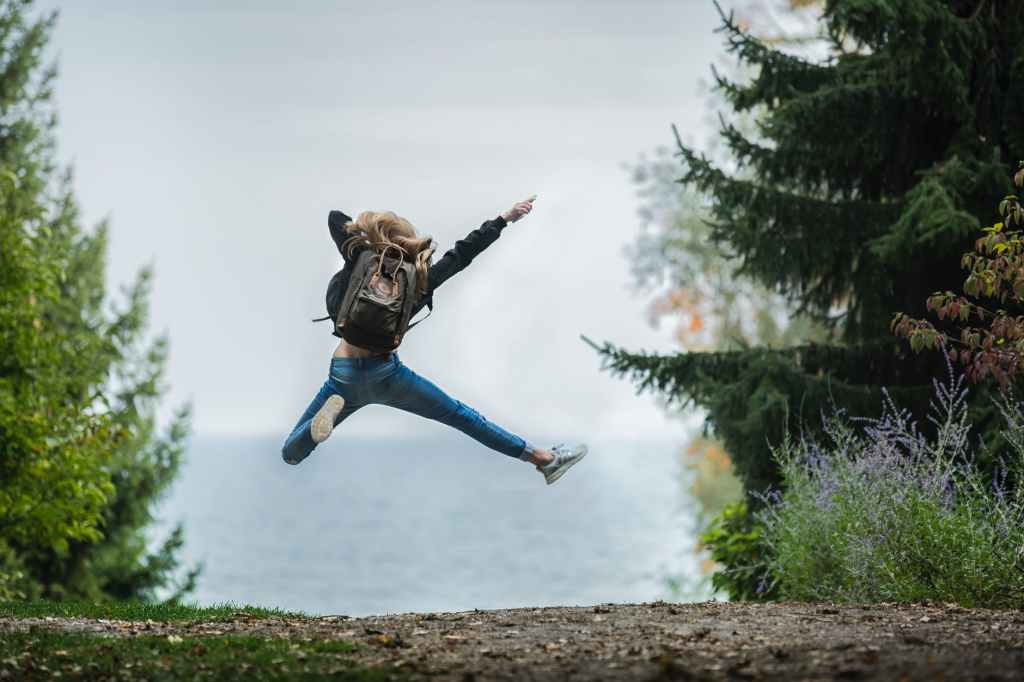
Something I’ve been working on lately is recognizing and better understanding how I’m feeling. It’s taken me by surprise rather often, as I have always considered myself a self-aware, introspective person. But social norms have long encouraged distancing emotion from logic, and it’s not uncommon for those of us raised in western society to live this disconnect unknowingly. It is these lessons in understanding and connecting to more of myself, that have led to the practices I encourage here: noticing, connecting with the non-human world, spending time not working, in a nutshell living more fully in my humanity rather than only in my logical mind.
The journey has been interesting and rewarding and I find myself eager to broaden the experience and engage more. Perhaps most interestingly, the synergy in the messages I get – both overt and subtle – from a wide range of sources is both amazing and encouraging. I love synergies, I love connections, it’s a perfect fit for me, and also a lovely reassurance that I am on the right path. Another fun and interesting part of this journey has been connecting more with my pre-working self: remembering the things I liked and dreamed of as a child and teenager, as well as more specific memories around certain feelings.
Another part of this process that I’m really enjoying is that I am reconnecting with the things I knew and loved when I was younger, but learned to push aside as an adult. And I think that, on the whole, that pushing aside was not the best step, because I am headed more toward the path of my wildest childhood dreams than any logical or socially safe path ever did.
In a recent conversation I was talking about the balance of anxiety/nervousness versus excitement. It’s a really fine line, and sometimes all it takes is adjusting your own perspective to tip the balance. It reminded me of one of (perhaps the) first personal lesson I received in the value of nervousness in supporting performance. As a competitive athlete through high school, it’s something I came back to often, but I didn’t carry it well to other places in my life, I hadn’t thought about it in a long time.
In middle school I was a mediocre (at best) competitive gymnast. I never passed the first level of club competition, but I did compete for a few years, and honestly thrived more on the training than the actual gymnastics or competition. Beam was typically my best event and my best score ever came during a meet when I was the most nervous I’d ever been. I was so nervous that I felt sick, and without prompting from my coach, I was able to turn that into focus and the kind of performance I always knew I could execute. I also fell (really slowly as I recall), which is (or was) the greatest deduction for a mistake, mainly because I pushed myself to perfect a move and didn’t quite hold on at the end. But I was nearly perfect outside of the fall and in the end, my greatest triumph in a loved but only mildly competent gymnastics career was also one that had a huge mistake.
I love this memory and this lesson. It has so much to notice and to give. Perfection is impossible, and mistakes don’t negate a good performance. Nerves are your body telling you that you care, that there is something to work for. If you allow nervousness to consume you, you’ll likely flop. If you allow them to help you focus, to turn your mind to your task, remember your lessons, and execute as you know you can, they can be your greatest performance aid.
I think there are two key lessons here that I take. The first is the balance of excitement and nerves. Anxiety, nerves, are most often somewhere on this spectrum, and in a lot of cases you have an opportunity to decide which path you’ll follow. When you notice your feelings and emotions, when you can name them, it gives you an opportunity to also nudge them to the side of support rather than hurt. If you feel fluttery and nervous, take a moment, what is triggering that? What is causing the anxiety? It can be an opportunity to adjust your perspective to find excitement, anticipation, and eagerness for what’s to come. From this point of view, it’s much easier to navigate yourself to a positive outcome, even if the path there is not perfect.
The second lesson – and perhaps the more poignant for me here – is to let go of perfection. My fall came in the middle of the routine, and it would have been easy to let that derail the entire thing, in which case we wouldn’t be talking about my best score ever. But it didn’t. For one of the few times in my life, I was able to set aside my mistake and move ahead with the same focus and execution that I had before the fall. And in that my greatest success came from an experience that was far from perfect.
As an adult I’ve so often felt that one mistake sets a bad tone and people lose confidence in my execution in all other ways. I don’t like this perspective, I don’t think it’s fair or reasonable, yet it’s something I’ve experienced a lot both professionally and personally. The beauty of a judged sport is that each mistake is marked individually, and you get credit for good execution just as you get marks off for poor execution. A fall or any other mistake is isolated from the rest of your performance, and therefore does not take away from good execution in other parts of your performance.
So I’m learning to find peace with my mistakes. To know that I am not a failure through and through when I’m not perfect. My hope for you and for the world is that we can move toward a world where this is true for all of us. Where we are generous with ourselves and each other, where we can reach our best performance even when we are not perfect. Because the more space we have for that, the better we’ll be all the time. If we know that our nervousness is excitement, and we know that we can succeed, we’ll also make fewer mistakes.
So notice how you feel and why, and let yourself be imperfect. You are human, we are all human.
 Out There With the Trees
So beautifully said.
LikeLike